
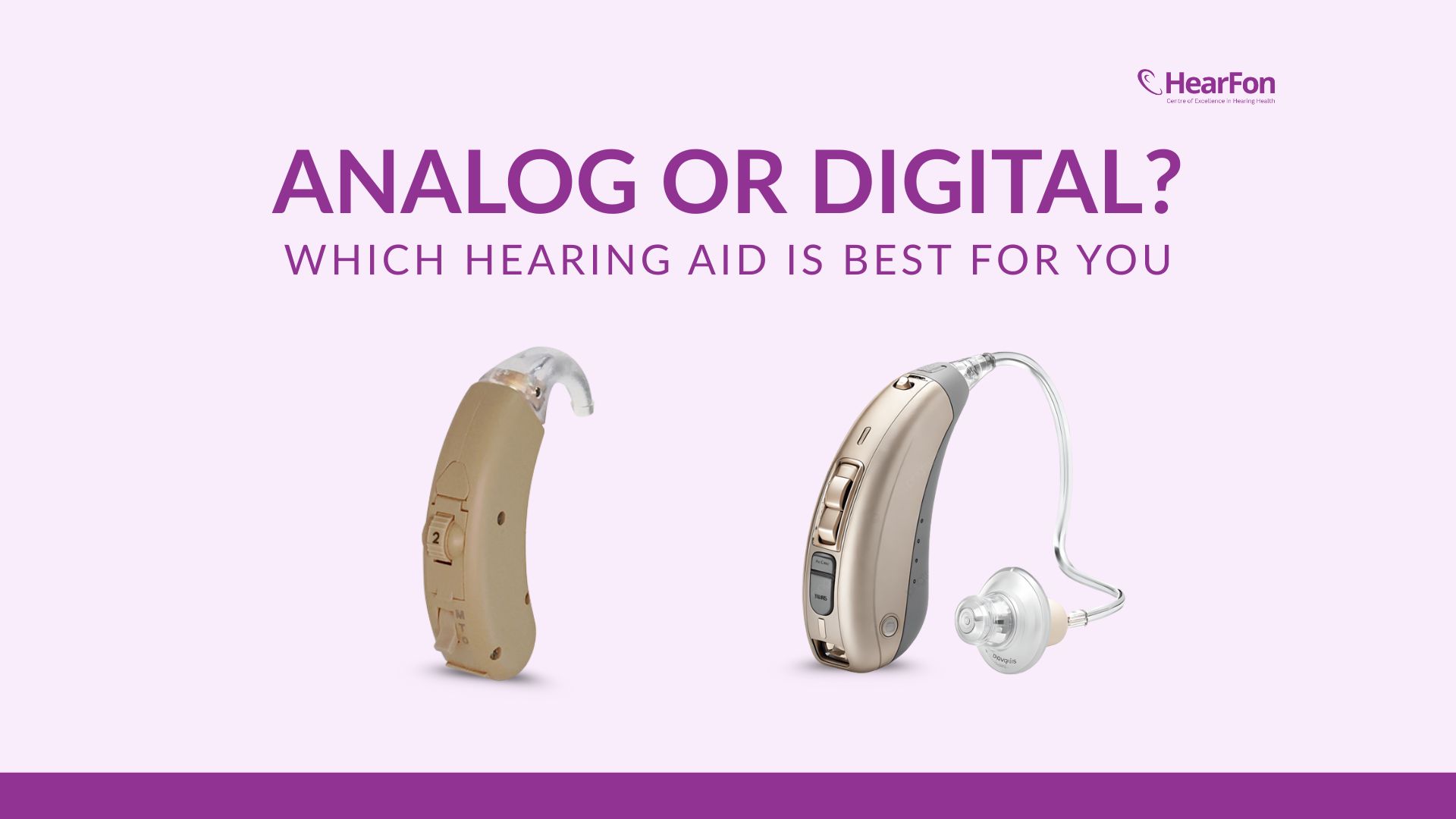
Hearing loss is a common concern affecting millions of people globally. Fortunately, hearing aids offer a practical solution to manage this challenge and improve quality of life. But when it comes to choosing the right device, many users find themselves caught in the debate of analog vs digital hearing aids: which type offers better performance, comfort, and value?
In this article, we’ll explore the difference between analog and digital hearing aids, their unique features, pros and cons, and help you make an informed choice.
Understanding Hearing Aids: Analog vs Digital Overview
Hearing aids are small electronic devices that amplify sound for people with hearing loss. They consist of a microphone, amplifier, and speaker. These devices come in two main types: analog and digital.
- Analog hearing aids amplify all sounds (speech and noise) equally.
- Digital hearing aids convert sound into digital signals and process it with advanced algorithms for a more tailored listening experience.
Both have their merits and limitations, and the right one depends on individual needs.
What Are Analog Hearing Aids?

Analog hearing aids are the traditional form of hearing aids. They process sound by amplifying continuous sound waves. The technology inside these aids is relatively simple compared to digital models.
They are often pre-programmed and can be adjusted manually using a volume wheel or button. These devices are still available today, especially for those who prefer simplicity or are looking for more budget-friendly options.
6 Key Features Of Analog Hearing Aids
Some notable analog hearing aid features include:
- Continuous amplification of sound waves
- Simple manual volume control
- Pre-set programs for different environments
- Lower power consumption
- Affordable pricing
- Often larger in size than modern digital models
Pros And Cons Of Analog Hearing Aids
Pros:
1. Cost Effective:
The analog hearing aid cost is generally lower, making them accessible to a wider audience.
2. Ease Of Use:
No complex setup or connectivity features — just turn on and adjust volume.
3. Durability:
Fewer electronic parts can mean longer lifespan in some cases.
Cons:
1. Lacks Noise Filtering:
Amplifies all sounds equally, including background noise.
2. Limited Customization:
Few personalization options based on the user’s specific hearing loss
3. Outdated Technology:
Becoming less common, with limited availability and support.
What Are Digital Hearing Aids And How Do They Work?

Digital hearing aids use advanced technology to convert sound into digital signals. These signals are processed by a computer chip to differentiate speech from background noise, reduce feedback, and enhance user comfort.
These hearing aids are highly programmable and can be tailored to the user’s specific hearing profile, making them more versatile and adaptive.
6 Key Features of Digital Hearing Aids
Some top digital hearing aid features include:
- Noise reduction and speech enhancement
- Feedback cancellation
- Directional microphones for improved focus
- Bluetooth connectivity for smartphones and other devices
- Multiple listening programs
- Remote control or app-based adjustments
Pros and Cons of Digital Hearing Aids
Pros:
- Superior Sound Quality: Distinguishes speech from noise effectively.
- Personalization: Adjustable to specific types of hearing loss.
- Modern Connectivity: Pairs with phones, TVs, and apps.
● Smaller Size: Sleek, discreet designs are common.
Cons:
- Higher Cost: Digital hearing aid cost is usually higher due to advanced technology.
- Complexity: Might be challenging for users unfamiliar with tech.
● Battery Life: May consume more power, requiring frequent recharging or replacement.
Analog vs Digital Hearing Aids: Key Differences Explained
| Feature | Analog Hearing Aids | Digital Hearing Aids |
| Sound Processing | Continuous amplification | Converts sound to digital signals for precision |
| Customization | Limited manual settings | Highly customizable, programmed to user’s hearing profile |
| Noise Reduction | Basic to none | Advanced noise and feedback reduction |
| Connectivity | None or very limited | Bluetooth, app control, remote adjustments |
| Size and Design | Often larger | Sleek and compact designs |
| Cost | Lower | Digital hearing aid cost is higher, depending on the features |
| Technology | Traditional | Advanced, AI driven in some models |
| Availability | Decreasing | Widely available and supported |
This difference between analog and digital hearing aids shows that digital models clearly lead in innovation and performance, though analog still holds value for cost-conscious users.
How To Choose The Right Hearing Aid For Your Needs?
Selecting the right device goes beyond technology – it depends on your lifestyle, comfort, and hearing profile. Here’s how to decide:
1. Budget
- Analog hearing aids are more affordable. If cost is a constraint, they may be a starting point.
- Digital aids come at a premium, but offer advanced features.
2. Lifestyle
- Active individuals may benefit from digital aids with adaptive sound environments and connectivity.
- If simplicity is a priority, analog aids may be more suitable.
3. Degree of Hearing Loss
- For mild hearing loss, analog may suffice.
- For moderate to severe loss, digital hearing aids offer better personalization.
4. Comfort with Technology
- Tech-savvy users can take full advantage of digital features.
- Users who struggle with tech may find analog aids more user-friendly.
5. Future Needs
Digital aids offer firmware updates and support newer features over time, while analog options may become obsolete.
If you’re unsure, consult an audiologist. A hearing test and professional advice can help you find a device suited to your unique needs.
So, Are Digital Hearing Aids Better Than Analog?
In most cases, yes — especially for users seeking superior sound quality, advanced noise control, and customization. However, analog models still serve a purpose for those who value simplicity, affordability, and reliability.
Understanding the analog vs digital hearing aids comparison helps you make an informed decision that suits your lifestyle, hearing profile, and budget. Ultimately, the best hearing aid is the one that fits you—your hearing profile, lifestyle, and budget.
Leave a Reply