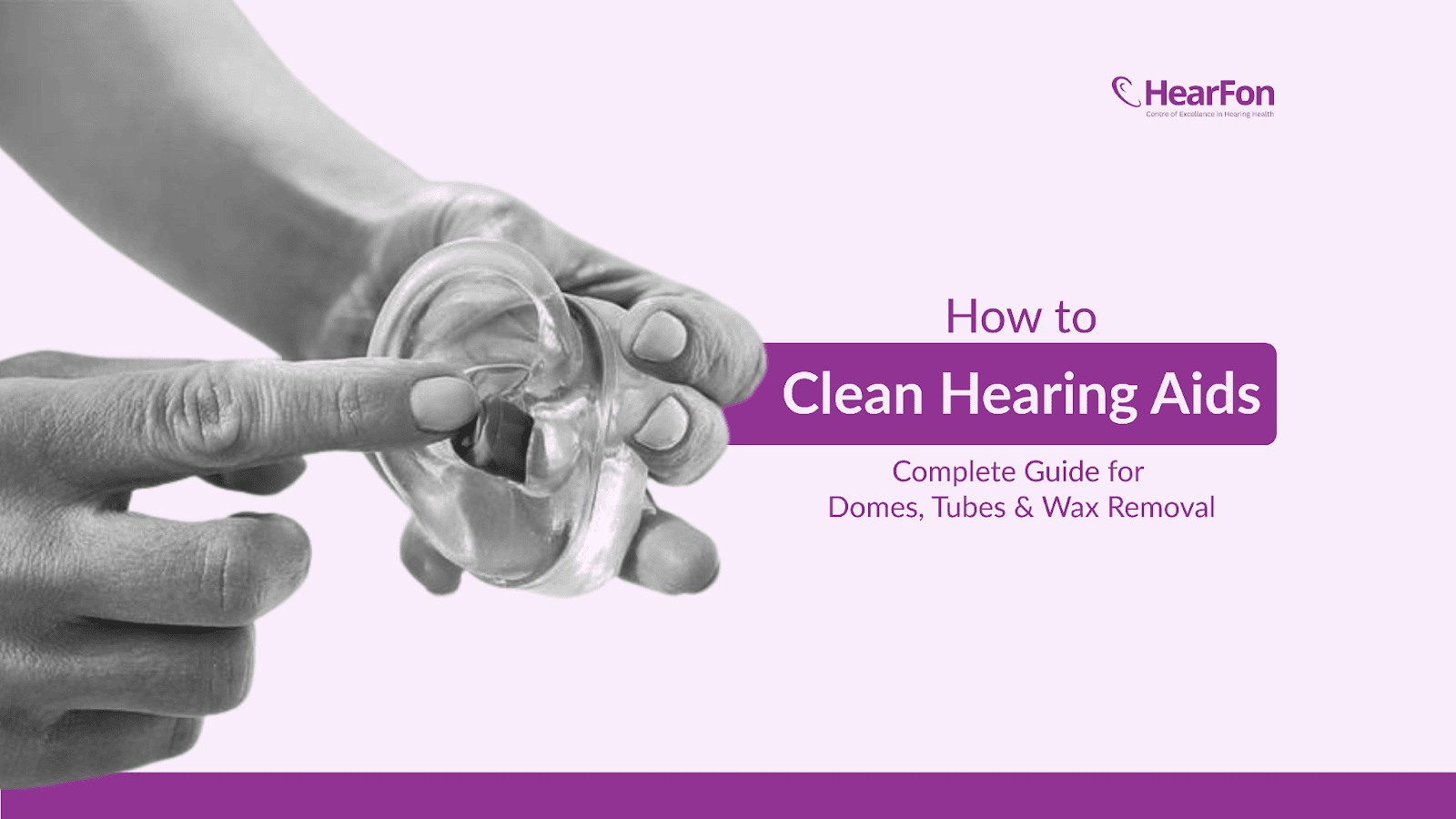
Hearing aids are delicate electronic devices that work best when they are kept clean and free from moisture, wax, and debris. Because they sit inside or behind the ear, they naturally accumulate earwax, oils, and dust – factors that can weaken sound quality or even cause the device to malfunction. Learning how to clean hearing aids correctly not only protects your investment but also ensures you continue hearing clearly every day.
Why Cleaning Hearing Aids Regularly Is Important?
Daily use exposes hearing aids to sweat, skin oils, and earwax, all of which can clog microphones, vents, and speakers. When these areas become blocked, sound may become muffled, distorted, or much quieter. Regularly cleaning your device helps:
- Maintain optimal sound performance
- Prevent costly repairs
- Extend the lifespan of the device
- Keep your ears healthy by reducing bacterial buildup
Whether you are wondering how to clean hearing aids of wax or simply trying to improve longevity, a consistent routine is essential.
Tools You Need to Clean Hearing Aids at Home
When learning how to clean hearing aids at home, it’s helpful to have the proper tools. Most hearing care providers supply a small cleaning kit, but you can also purchase one online. Common tools include:
1. Soft, Dry Cloth:
Used for wiping down the exterior of the device daily.
2. Cleaning Brush:
A small, soft-bristled brush designed to clean microphones, ports, and seams without causing damage.
3. Wax Pick Or Loop:
Used to remove stubborn wax from openings and receiver ports.
4. Vent Cleaner:
A thin, flexible tool for clearing vents in in-the-ear (ITE) devices.
5. Alcohol-free Wipes:
Safe for sanitizing the surface without damaging components.
6. Hearing Aid Dehumidifier Or Drying Box (Optional But Recommended):
Helps remove moisture overnight to preserve internal circuitry.
How to Clean Different Parts of Your Hearing Aids?
The cleaning process varies depending on whether you have a behind-the-ear (BTE), receiver-in-canal (RIC), or in-the-ear (ITE) model. Here’s how to clean each part safely:
How To Clean Hearing Aids (All Models)?
- Wipe the device gently with a dry, soft cloth.
- Use the cleaning brush to sweep dirt and dust away from microphones and seams.
- Hold the device upside down so debris falls away from the microphone openings.
Avoid water, alcohol, or cleaning solutions on the main body—they can damage internal parts.
How To Clean Hearing Aid Domes (RIC Models)?
Domes sit deep inside the ear canal and collect wax easily. Knowing how to clean hearing aid domes is crucial:
- Remove the dome from the receiver (most domes click off easily).
- Wipe it with a soft cloth or alcohol-free wipe.
- Use the brush to remove wax from the openings.
- If the dome is stiff, torn, or discolored, replace it—usually every 4–8 weeks.
Never wash domes with water; moisture can travel into the receiver.
To better understand how hearing aid domes work, how to choose the right type, and how to use them correctly, you can refer to our simplified guide on hearing aid domes.
How To Clean Hearing Aid Tubes (BTE Models)?
People often ask how to clean hearing aid tubes, as BTE tubing can trap moisture and wax.
- Remove the earmold and tubing from the hearing aid body.
- Use a blower bulb or cleaning line to push out moisture or debris.
- Wipe the outer surface with a dry cloth.
- Ensure tubing is completely dry before reattaching.
If the tubing becomes yellow, hard, or cracked, it’s time for replacement.
How To Clean Wax Guards And Filters Properly?
Most modern devices include replaceable wax guards to prevent receiver blockages.
- Hold the device with the receiver facing upward.
- Insert the tool from your wax guard kit to remove the old guard.
- Insert the new guard in its place.
Replace wax guards whenever sound becomes weak or muffled—often every few weeks.
How to Clean In-the-Ear (ITE) Hearing Aids Safely?
Because these devices sit fully inside the ear, wax management is especially important.
- Brush the microphone ports gently.
- Use a wax pick to remove wax from around the receiver opening.
- Clean vents with a vent tool to keep airflow clear.
Always work slowly and avoid pushing wax deeper into openings.
How Often Should You Clean Your Hearing Aids?
Consistency is the key to long-term device performance. Here’s a simple guide:
Daily Cleaning
- Wipe exterior surfaces
- Brush microphones
- Check domes or tubing for wax
Weekly Cleaning
- Clean domes thoroughly
- Clear vents and receiver openings
- Clean or replace wax guards
Monthly or As Needed
- Replace domes
- Replace tubing (if BTE)
- Deep-clean earmolds
Your hearing care provider may recommend more frequent cleaning if you produce a lot of earwax or live in a humid environment.
How To Dry and Store Hearing Aids Correctly?
Moisture is one of the biggest enemies of hearing aids. Proper drying and storage can prevent corrosion and internal damage.
Drying Your Hearing Aids
- Always remove the battery door (if your device uses disposable batteries) to allow air circulation.
- Place the hearing aids in a dry jar or electric drying box overnight.
- Avoid using hairdryers or heaters—excessive heat can warp the device.
Storing Your Hearing Aids
- Keep them in a protective case when not in use.
- Store them in a dry, cool place away from direct sunlight.
- Keep them away from children and pets—hearing aids are a choking hazard.
6 Useful Tips For Hearing Aid Maintenance Tips To Improve Lifespan
Here are expert-recommended habits that will help keep your hearing aids functioning at their best:
1. Keep Ears Clean:
Reducing wax buildup in your ears prevents clogging of receivers and domes.
2. Avoid Wearing Devices While Showering Or Swimming:
Even waterproof models can malfunction if submerged.
3. Apply Hairspray, Perfume, Or Makeup Before Wearing Hearing Aids:
These products can clog microphones.
4. Handle With Clean, Dry Hands:
Moisture and oils can transfer to delicate parts.
5. Get Professional Cleaning Every 3-6 Months:
Audiologists have specialized tools to deep-clean devices safely.
6. Replace Consumable Parts (Domes, Filters, Tubing) Regularly:
These components wear out faster than the device itself.
Final Thoughts on Cleaning Hearing Aids
Understanding how to clean hearing aids, whether you’re dealing with wax buildup, blocked domes, or clogged tubes, is essential for maintaining crisp sound and long-lasting performance. With the right tools and a regular cleaning routine, you can keep your hearing aids working like new. Cleaning your hearing aids at home doesn’t have to be complicated – just be gentle, patient, and consistent. Your ears—and your hearing devices – will thank you.