
Why Hearing Tests Matter: Early Signs You Shouldn’t Ignore
Hearing plays an essential role in communication, safety, and overall quality of life. Yet many people ignore early signs you need a hearing test, such as difficulty following conversations, constantly turning up the TV volume, or asking others to repeat themselves. Just like eye exams or dental checkups, regular hearing tests help detect issues early – before they significantly impact daily life. Whether you’re experiencing symptoms or simply maintaining good ear health, knowing how to prepare for a hearing test ensures accurate results and a smooth experience.
4 Common Myths About Hearing Tests (And The Truth Behind Them)
Misconceptions often prevent people from getting their hearing checked. Here are a few hearing test myths you should stop believing:
Myth 1: Hearing Tests Are Only For Older Adults.
Hearing loss can affect anyone – children, young adults, and seniors.
Myth 2: If You Can Hear Sounds, Your Hearing Is Fine.
Understanding speech, especially in noisy environments, is just as important as detecting sound.
Myth 3: Hearing Tests Are Uncomfortable Or Invasive.
Most tests are painless, simple, and non-invasive.
Myth 4: Hearing Loss Can’t Be Treated.
Many forms of hearing loss are manageable through hearing aids, assistive devices, or medical treatment.
5 Types Of Hearing Tests You May Undergo
Audiologists use a variety of tests to evaluate different aspects of hearing:
1. Pure-Tone Audiometry
You’ll listen to a series of beeps at different pitches and volumes. This helps measure the quietest sounds you can hear.
2. Speech Audiometry
This test measures how well you understand speech at various volumes.
3. Tympanometry
A small probe gently changes the pressure inside your ear canal to check middle-ear function. It’s helpful in detecting fluid, infections, or eardrum issues.
4. Otoacoustic Emissions (OAE)
Used for infants and some adults, this test measures the ear’s inner response to sound.
5. Auditory Brainstem Response (ABR)
This noninvasive test measures electrical activity in the hearing nerves and brain pathways.
Knowing what to expect during a hearing test can make the process far less intimidating.
When Should You Take a Hearing Test?
You should take a hearing test if you notice muffled hearing, difficulty following conversations, frequent repeats, ringing in the ears, or if you’re increasing TV or phone volume. A test is also recommended after noise exposure, ear infections, or any sudden change in hearing. Even without symptoms, routine checks help catch problems early.
How To Prepare For A Hearing Test?
Preparing properly helps ensure accurate, reliable results. Here’s how:
1. Avoid Loud Noise For At Least 24 Hours
Exposure to loud sounds can temporarily shift your hearing thresholds. Try to stay away from concerts, power tools, loud headphones, or busy traffic noise.
2. Clean Your Ears Carefully
Earwax can block sound from reaching the eardrum. Clean only the outer ear with a washcloth. Avoid inserting cotton swabs or other objects, which may push wax deeper or injure the ear.
3. Review Your Medical History
Be ready to discuss:
- Ear infections
- Noise exposure (workplace or recreational)
- Medications you’re taking
- Family history of hearing loss
4. List Symptoms You’ve Noticed
If you are experiencing any signs you need a hearing test, such as ringing in the ears or muffled hearing, write them down. This helps your audiologist understand your concerns.
5. Bring A Friend Or Family Member
Some clinics conduct speech tests involving familiar voices. Even when not required, having support can help you remember instructions and results.
What to Expect During Your Hearing Test?
Knowing what to expect during a hearing test helps reduce anxiety:
1. Initial Discussion:
The audiologist will ask about your symptoms, lifestyle, and concerns.
2. Physical Ear Examination:
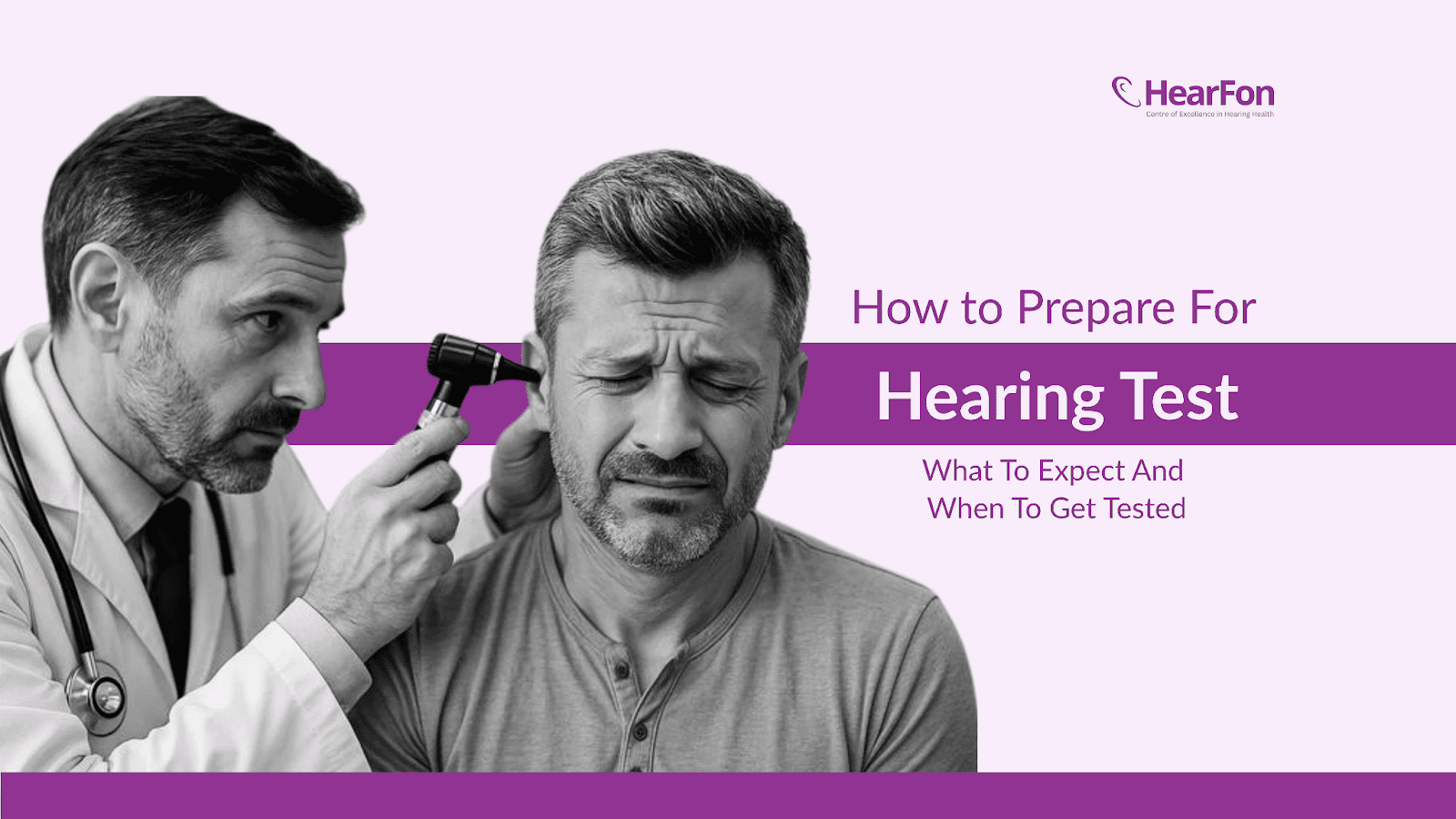
The provider uses an otoscope to look for wax buildup, infections, or structural issues.
3. Sound Booth Testing:
You’ll sit in a sound-proof room wearing headphones. Respond to tones by pressing a button or raising your hand.
4. Speech Testing:
You’ll repeat words or sentences at various volumes.
5. Additional Tests:
Depending on your needs, tympanometry or OAE may follow.
6. Review of Results:
Your audiogram (hearing chart) will show your hearing levels across frequencies.
The entire appointment typically lasts 30–60 minutes.
Do’s And Don’ts Before Your Hearing Test
Do’s:
- Do rest well; fatigue can affect your concentration.
- Do bring a list of medications, as some can impact hearing.
- Do mention any recent illnesses, allergies, or sinus issues.
- Do ask questions if you feel unsure about the process.
Don’ts:
- Don’t attend the test if you are sick with a cold or sinus infection; congestion can alter results.
- Don’t use earphones at high volume before your appointment.
- Don’t drink excessive caffeine—it can cause jitteriness or temporary ringing that may affect responses.
- Don’t clean your ears aggressively or use ear candles.
What Happens After Your Hearing Test?
Once your hearing test is complete, the audiologist will:
- Explain your audiogram and discuss any hearing loss detected.
- Offer treatment options if needed—hearing aids, medical referrals, or follow-up tests.
- Provide tips for hearing protection.
- Schedule future checkups based on your results.
If your hearing is normal, the test still serves as a valuable baseline for future comparison.
How Often Should You Get a Hearing Test Done?
How often you should get tested depends on your age and risk factors:
- Adults under 40: Every 3-5 years
- Adults 40-60: Every 1-3 years
- Adults over 60: Annually
- Anyone exposed to loud noise regularly: Yearly
- If experiencing symptoms: Immediately – don’t wait
Knowing when should you take a hearing test can prevent long-term complications and help catch issues at the earliest stage.
Final Thoughts On Preparing For Your Hearing Test
Taking care of your hearing is an investment in your overall well-being. By understanding how to prepare for a hearing test, recognizing early symptoms, and debunking common hearing test myths, you set yourself up for the most accurate results. Regular hearing evaluations ensure that any potential problems are caught early and treated effectively. Prioritize your hearing health, stay informed, and schedule routine checkups to maintain a lifetime of clear, comfortable listening.
Leave a Reply